
Introduction
Gower Wilson Memorial Hospital was originally opened in February 1941, and named in honour of Lord Howe Islander Gower Wilson, who was tragically lost at sea between Sydney and Lord Howe Island whilst captaining the cruiser Viking in November 1936.
The local community on the island has a strong and proud tradition of supporting the hospital. The construction of the building in 1941 was funded by donations from locals, and volunteer labour from islanders, and this support continues with donations to the Friends of Gower Wilson Memorial Hospital fund.
Since its construction, the hospital has come under the influence of the South Eastern Sydney Local Health District (SESLHD) who provide funding for staffing and much of the hospital’s equipment. The Lord Howe Island Board owns and maintains the building, and the local charitable organisation – the Friends of Gower Wilson Memorial Hospital continue the tradition of local support for the hospital – by raising funds for equipment.
Gower Wilson
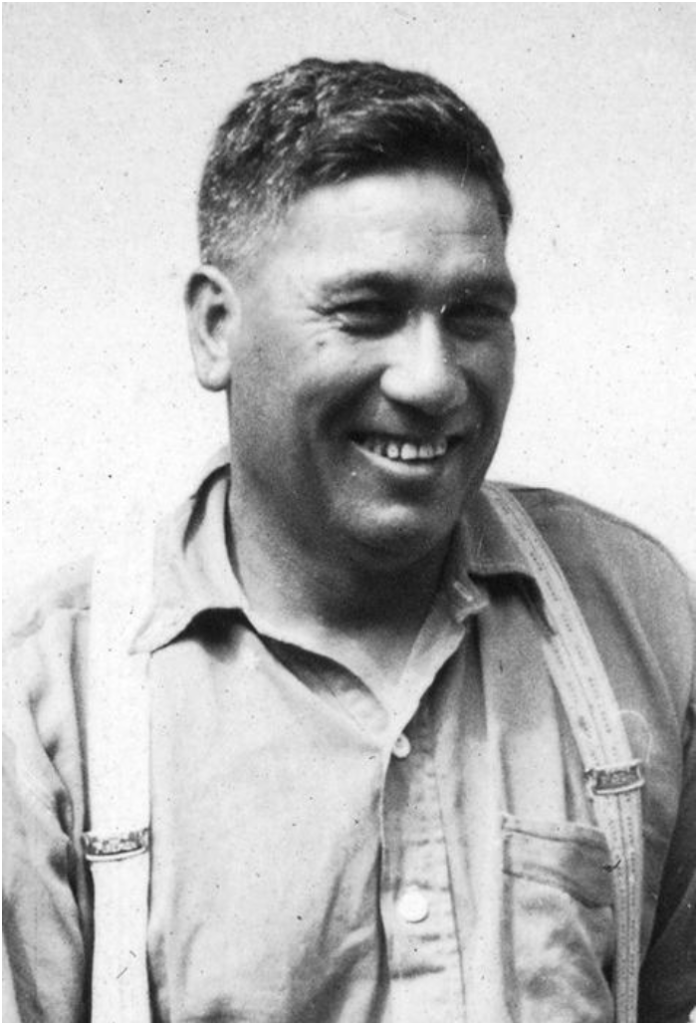 | Gower Wilson was, by many accounts, an extremely capable and well-liked man, who had served in the First World War. Shortly after he went missing at sea, tributes flowed into newspapers, where he was described as “a man of indomitable will and matchless integrity, yet withal so kindly, gentle and courteous […] it is difficult for those who knew him to imagine any set of circumstances over which he could not triumph” and “I too was struck by the charm of his disposition and the outstanding personality which would have ensured success in any walk of life […] Truly it was a reverence born of affection that bestowed on him the title of “Uncrowned King of Lord Howe”. He was, of course, named after the mountain that towered over his island home. Islanders tell tales of how, at Christmas, he would invite all the island’s children to his home for a party and his family would give them a gift. Or, how in medical emergencies his kitchen table had served as an operating table. |
Construction begins
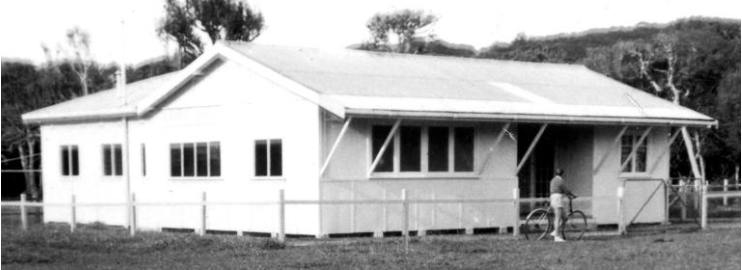
Prior to 1941, there was no hospital, nor any doctor or medical centre on the island. Shortly after Gower’s disappearance, in February 1937, the Gower Wilson Memorial Committee was inaugurated to raise funds to build a hospital. In addition, every man on the island pledged his services to help build a hospital. Land for the hospital was donated by Mr C. Retmock, whose family still live next door.
It wasn’t until July 1940 that the building material arrived on the island, and construction was completed in February 1941. Dr. Cedric Bowker, a GP from Sydney, would serve as the island’s first resident doctor.
In 1952 a dental surgery was added to the front of the building, and in the 1990s it underwent substantial renovations. Dr John Blyth, the GP at the time worked hard with the State Government and local volunteers to save the original hospital from demolition, and instead encourage a plan for renovations.
The hospital today
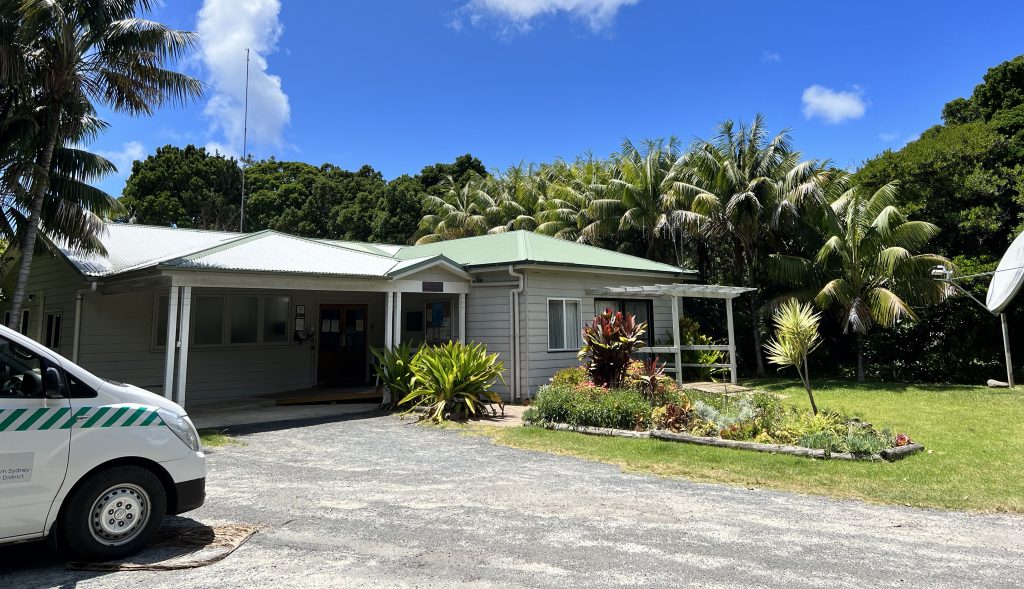
In modern times, the hospital sees about 3,500 patients per year, including about 350 emergency visits. Only about 20-30 of these require medical transport to the mainland for ongoing urgent care.
Currently, the hospital has a full-time GP and hospital nurse, a part time practice nurse for the GP clinic, a part time community nurse role and a part time receptionist. Support staff on the mainland assist with hospital management. There is a visiting dental service twice a year and we regularly receive visiting specialists – most notably Dr Greg Cranney, a cardiologist who has visited several times annually for several decades, and now his daughter – Dr Jemma Cranney – a geriatrician. We also receive visiting allied health specialists, such as an optometrist.
Many thanks to Rosemary Lynch and Chris Murray, whose article The loss of the Viking – Tributes to Gower Wilson, published in The Signal was the main source for this article.